

Hi all,
I want to share with you the great speech that Ian Rowe gave at the Thomas Sowell Conference last week. The videos of the event won’t be released for some time, and I asked Ian if it would be okay to post his speech here for you. He graciously agreed.
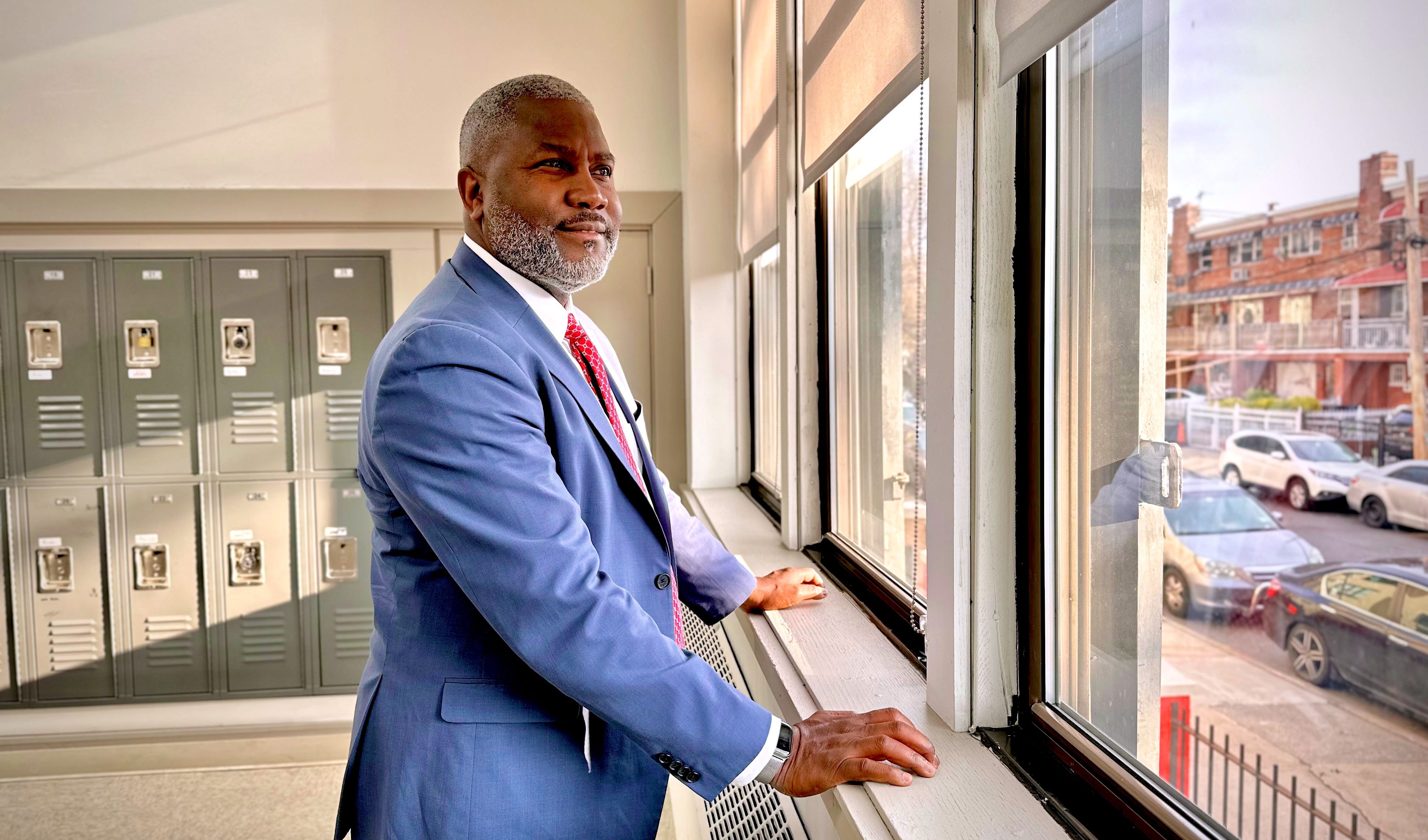
For those of you who don’t know, Ian Rowe is the co-founder of Vertex Partnership Academies in the Bronx, New York. I visited the school twice—once with my father, Shelby Steele—and spent the day with the students. The school is rigorous and classical in its educational approach. I interviewed several students for the upcoming “White Guilt” documentary, and what impressed me about them was their rejection of victim culture in pursuit of the American Dream. Not only that, but the teachers are passionate. If I lived there, I would send my kids there.
With a leader like Ian Rowe, it’s easy to see why. Here’s his speech in full, along with the slides he featured: “How Thomas Sowell Thankfully Made Me a Contrarian Educator.”
Ian Rowe: When I was twelve years old, I had never heard of Thomas Sowell. I doubt any of the kids in my neighborhood had. For the vast majority of American students in K-12 education, opportunities to learn about Sowell or read his books were and remain virtually non-existent.
Yet at a dozen years around the sun, unbeknownst to me, I was about to exhibit the type of Sowellian thinking that challenged the false comfort of conventional wisdom and laid the groundwork for me to become a contrarian educator.
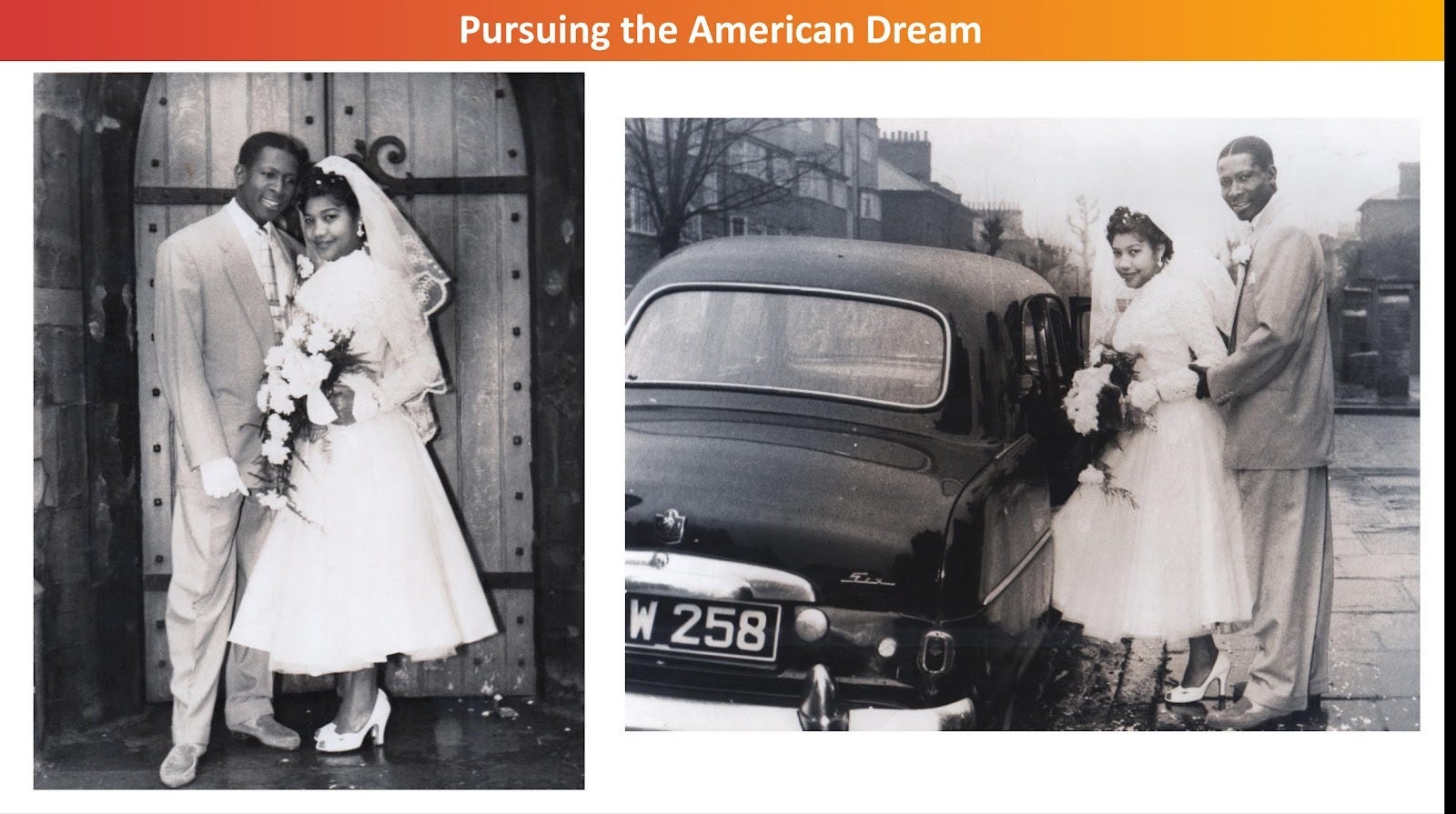
It was the late-1970s. My parents, brother and I had emigrated from Jamaica, West Indies, ultimately moving to Laurelton, Queens, at the time a predominantly Jewish, white middle class community, but was transitioning into a racially mixed neighborhood as more black residents moved in. Unfortunately, my Junior High School had become the epicenter for increasing racial tension and violence.
To solve this problem, the local school board voted to open an annex two miles away in Rosedale, a small, Irish and Italian American community. That decision led almost every white family in my school to transfer their children, leaving my junior high segregated and virtually all-black.
My parents did not automatically have a concern with a school being all black. In Jamaica, an all black country they had attended excellent schools with all black students, teachers and leadership.
But they heard from some American parents - you got to pull your kid out - Wherever go the white kids, so goes the quality of the education. Or so the stereotype went.
They figured maybe to give their son a real shot at the American Dream, they needed to transfer me.
But on the Sunday evening before they had to file the transfer documents, my inner Thomas Sowell came out. While it was nice that some of my classmates were white, I didn’t feel their presence was a prerequisite for me to learn. I liked my school and teachers. Why did all black, have to mean all bad?
Thankfully, my parents let me stay at my school. I received a public education that made me believe anything was possible. I took the exam to get into Brooklyn Tech, one of three specialized high schools in New York City. After that, I went on to earn my degree in Computer Science Engineering from Cornell University, and after that my MBA from Harvard Business School.
I share this story about my own coming-of-agency moment and ensuing education because it epitomizes the idea that growing up I did not believe the racial makeup of a school should determine if it’s good or not, or that my race should give me an inherent advantage or disadvantage to get into a good school; or that my race should shield me from the consequence of my actions. It wasn’t until I encountered Thomas Sowell for the first time that I realized there was a conflict of visions on these topics. That happened when I attended Cornell in the early 1980’s, not because I was assigned a reading or a lesson from Sowell, but because of this.
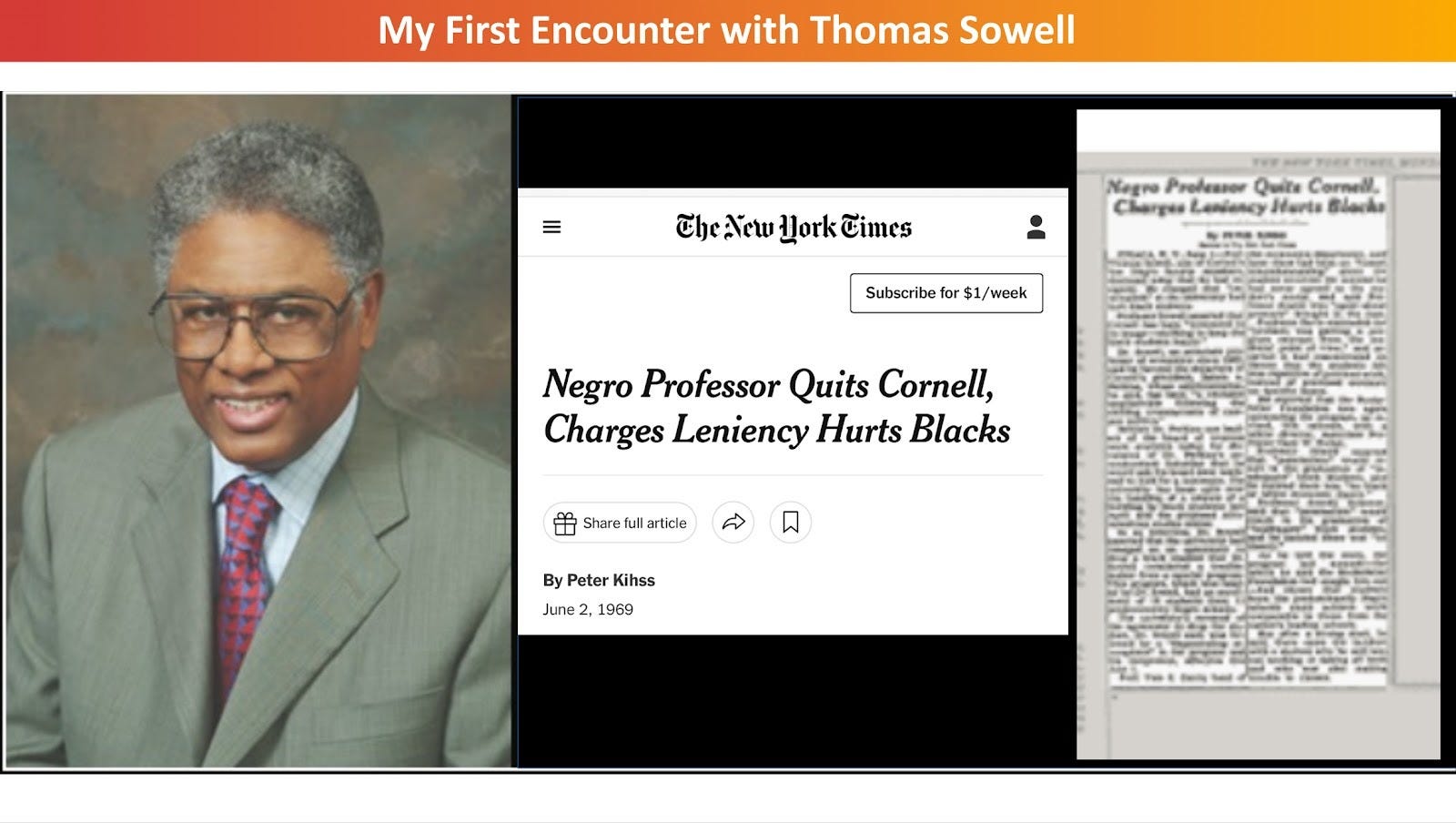
During the black student protests of the 1980s, I discovered this actual New York Times headline from 1969 announcing that Thomas Sowell had been a professor at Cornell and resigned over a dispute that he wanted to expel a black student for disorderly behavior but the school refused to do so even though the behavior had clearly violated Cornell’s standards. Professor Sowell warned that “paternalism” and leniency towards blacks was counterproductive and would result in the graduation of “inadequate” black students.
When Cornell said they were going to keep the student enrolled, Sowell said I am out. This was 1969, a young Negro professor (as the headline shows) at an Ivy league institution had the audacity to say I am not going to conform to low expectations around race. So he quit. Honestly, it blew my mind. The more I read and listened to Sowell, so many of the things he said resonated with my beliefs and experience.
Remember that song by Roberta Flack - killing me softly. “Singin’ my whole life with his words.” But instead of killing me softly, Sowell’s words were empowering me to reject these false notions around race.
Take for example, when I went to Brooklyn Tech, there was a very racially and socio-economically diverse student body. All the students and teachers knew every single kid earned the right to be there because we all passed the same rigorous entrance exam. There was no impostor syndrome. Today, for a myriad of reasons the representation of black and hispanic students is far lower, and unfortunately there are those who now want to get rid of the exam because it is now deemed racist. Sowell strongly opposed this reductionist thinking because he, like me, believes removing objective standards robs kids of the dignity to prove that they can compete on equal footing.
And on the notion that almost led my parents to transfer me years earlier, that all black schools must be bad, Sowell wrote about his own education: “The shock of being in a school whose standards were higher than I was able to meet, at first took place in an all-black school in Harlem.”
These ideas that all-black education was inherently inferior or that black educational excellence had never occurred were perhaps the most noxious misconceptions that Sowell wanted to expunge.
Indeed, in 1976, Sowell published Patterns of Black Excellence, to explore the factors that drove the performance of a number of successful black schools during Jim Crow and state-sponsored racial oppression. One was the Dunbar school in Washington, DC, which sent a higher percentage of its graduates to college than any white public high school in Washington, and from 1870 to 1955 repeatedly equaled or exceeded national norms on standardized tests.
Many in this room are familiar with the nearly 5,000 Rosenwald schools that Booker T. Washington built exclusively for black children in fourteen states across the American South, graduating luminaries like Maya Angelou and Senator John Lewis.
Rather than accept the popular notion of persistent black failure, Sowell challenged us to understand how these seemingly under-resourced schools overcame the indignities and inadequacies imposed by legal segregation. If black excellence could occur under those conditions then, we can do it now! That has been the animating belief of my life.
Sowell observed that “one small, but important, part of the advancement of black Americans has been educational achievement. Here, as in other areas, the pathology is well known and extensively documented, while the healthy or outstanding functioning is almost totally unknown and unstudied.”
As frustrated as Sowell was with those who suffer amnesia of the history of black educational excellence, he was equally vexed at the lack of understanding of what caused the tragic demise of these high performing all-black schools.
We all know that Brown versus Board of Education was a landmark 1954 Supreme Court case that unanimously ruled racial segregation in public schools unconstitutional. The decision declared that the doctrine of “separate but equal” had no place in public education, stating that “separate educational facilities are inherently unequal.” While the decision was hailed as a universal good, it was only Thomas Sowell who had the courage to criticize the flawed reasoning behind the decision.
The ruling correctly deemed state-enforced segregation unconstitutional. But as Sowell pointed out, the dismantling of the “separate but equal” legal doctrine carried with it an underlying rationale that separate black schools - even voluntarily segregated high performing schools like Dunbar or the Rosenwald schools - were inherently inferior. This toxic belief led to the downfall of many of the best black schools like Dunbar and closure of nearly 5,000 Rosenwald Schools, arguably the greatest example of self-determination in black education.
Sowell wrote “Much of what has been said about the [Brown] decision has treated the result as paramount and the reasoning as incidental. But today, it is painfully clear that the educational results of Brown have been meager for black children. Meanwhile, the kind of reasoning used in Brown has had serious negative repercussions on our whole legal system, extending far beyond issues of race or education.”
It is sheer blasphemy to criticize Brown v Board of Education. But it is this commitment to truth-telling that Thomas Sowell has practiced throughout his life to shatter unassailable myths, to buck conventional wisdom - not to be contrarian for contrarian sake, but to call out when there is evidence to the contrary. That’s what inspires me and so many school leaders across the country.
To come full circle, I have spent the last fifteen years running public charter schools in low-income communities educating primarily black and Hispanic students, including Vertex Partnership Academies, our International Baccalaureate public charter high school in the Bronx organized around the four cardinal virtues of Courage, Justice, Temperance and Wisdom. Our students recite these I statements each morning.
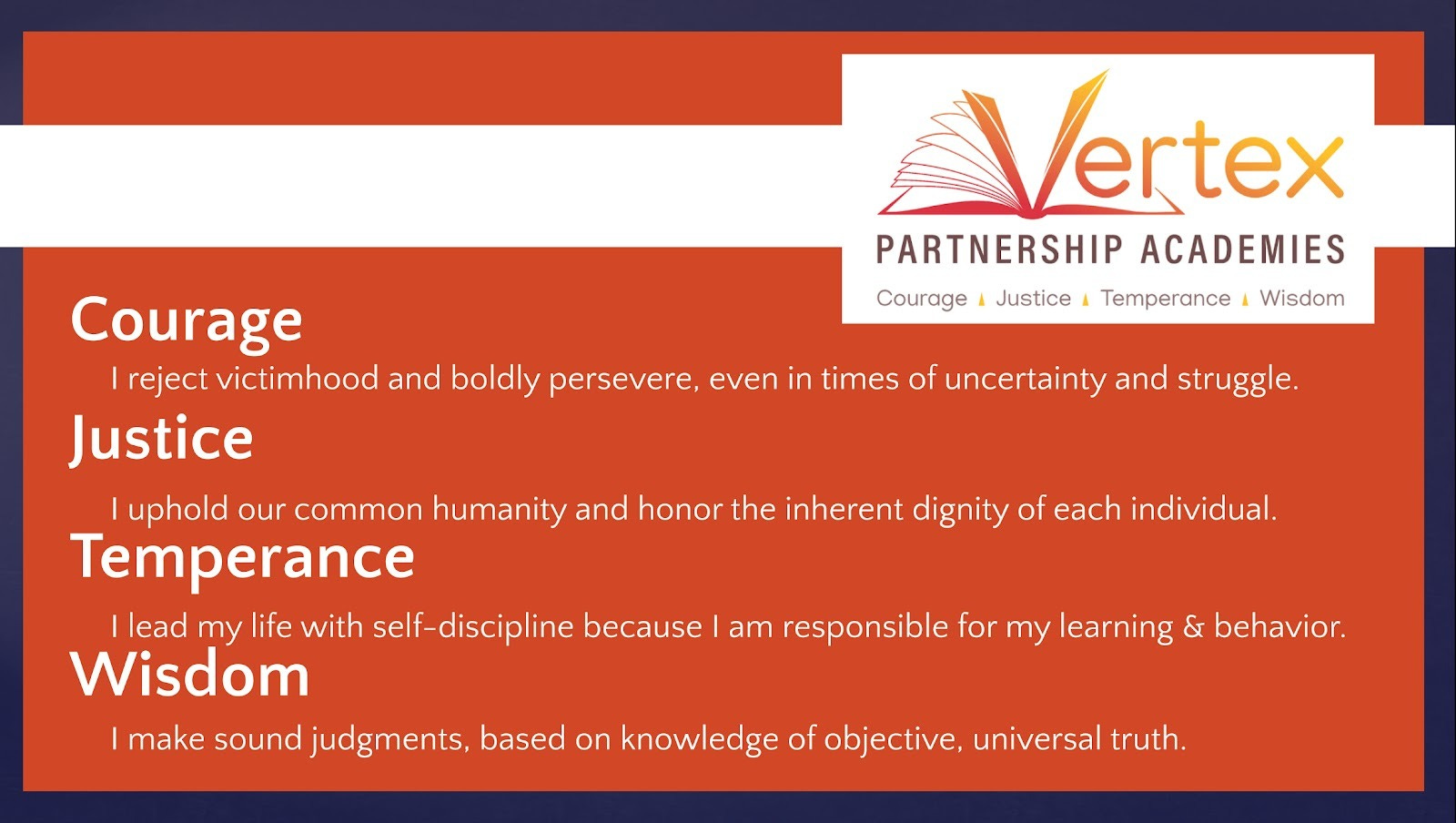
For Courage, the students say “I reject victimhood and boldly persevere, even in times of uncertainty and struggle.” When our students say these words out loud, in unison, they are making a collective commitment for how they want to operate as individuals and as a community.
The goal is to inspire young people to have their own coming-of-agency moment to understand the pathways through which they can become agents of their own uplift.
In our required Economics course, there is a unit entitled Facts, Fallacies and Freedom: Thomas Sowell and the Pursuit of Truth. High school students must read from Sowell’s Basic Economics, Patterns of Black Excellence and Charter Schools and their Enemies. At the end of the unit, students will be able to do four things:
Think like social scientists, using evidence, logic, and data to evaluate claims.
Recognize myths and fallacies that distort public understanding of inequality and achievement.
Apply economic and sociological reasoning to real-world problems of opportunity and development.
Communicate empirically supported arguments about human potential.
And through my work at the American Enterprise Institute, this unit on Sowell will be included in the Agency curriculum we are distributing free of charge beginning in fall 2026, hoping to reach tens of thousands of high school students across the country.
The key is to develop independent, evidence-based thinkers by exposing students to independent, evidence-based thinkers. As an example, here are our students with Shelby Steele, another evidence-based contrarian, when he visited Vertex.
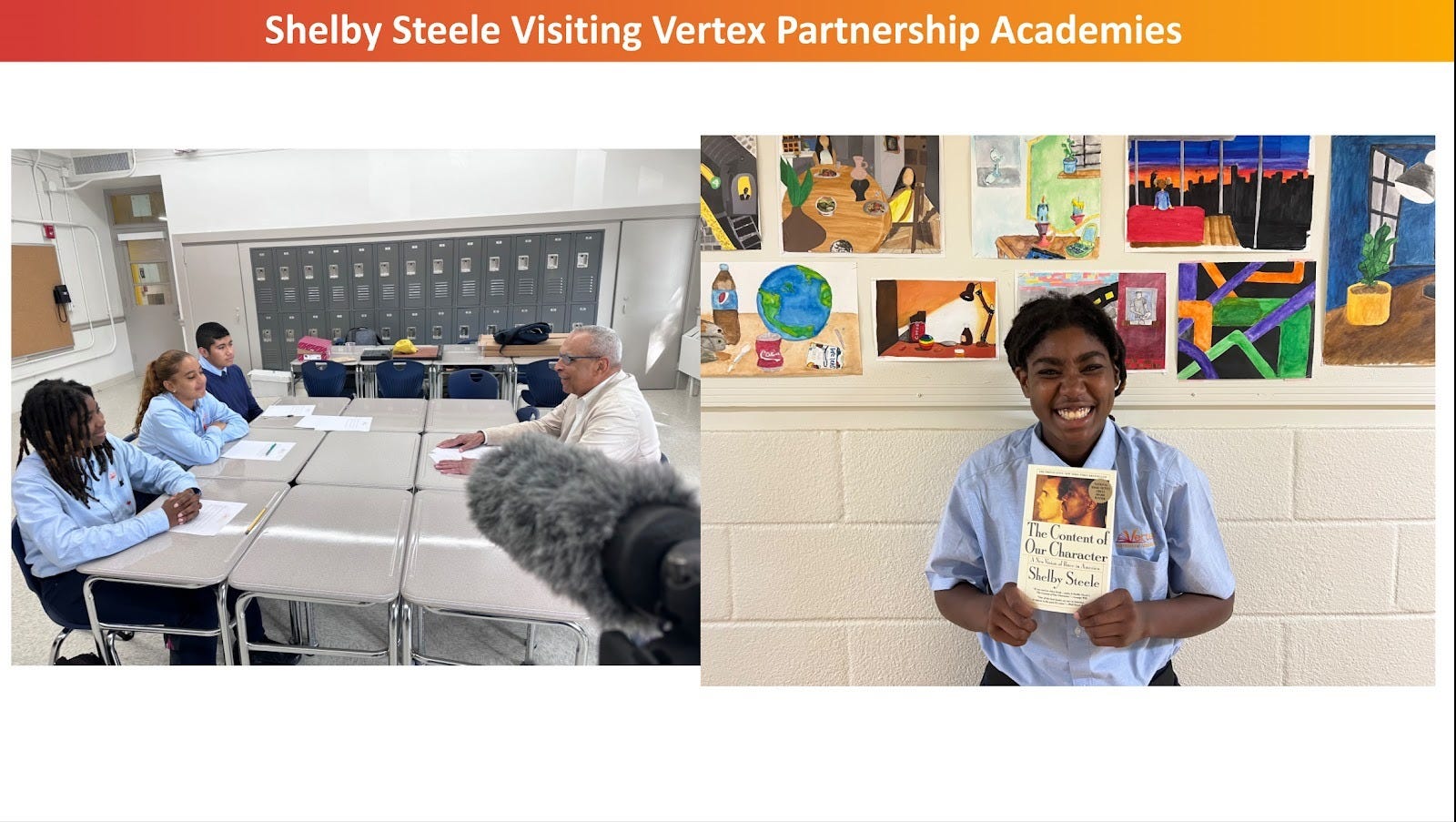
Shelby’s support has now helped us build a library where our students have access to great books like the Content of Our Character and Discrimination & Disparities, and authors inspired by Thomas Sowell like Glenn Loury, Coleman Hughes, Roland Fryer and of course the great Clarence Thomas. And on that note, here are our students with Justice Thomas at the Supreme Court, our fourth trip.
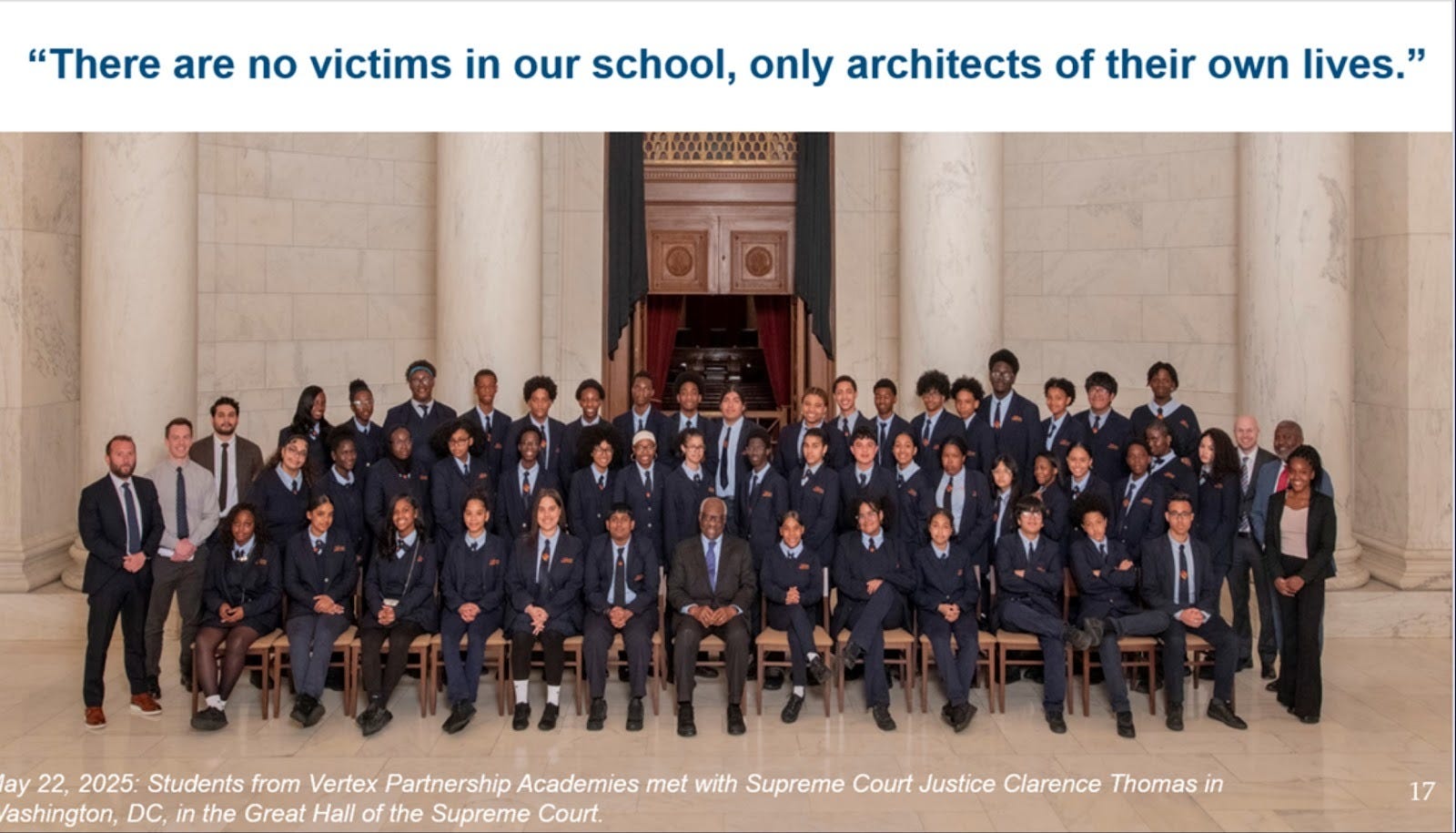
Thank you Justice Thomas. BTW, I can attest Justice Thomas did share with our students his grandfather’s admonition to reject victimhood: “Old man can’t is dead. I buried him”
Our school motto is: There are no victims in our school, only architects of their own lives. The way we ensure that, is that unlike my upbringing, my students and hopefully thousands across the country will know the work and name of Thomas Sowell.
Thank you very much.
Ian Rowe
Happy Halloween and may the Dodgers win the next two games against the Jays and take the World Series Championship,
Eli
Thank you. I wish there was such an academy in Buffalo!
Dear Eli and Ian,
We can see how Cornell has provided some bad examples. Hopefully now and in the future we will be known for our good examples.
Thanks,
randy